

AZRIVA Software Development
          Company Ahmedabad

How We Scaled a Fantasy Sports App to 3M+ Users at 99.9% Uptime.

A fast-growing fantasy sports platform was being stretched by live-event traffic spikes — high concurrency loads, delayed real-time score updates, and an infrastructure with no elasticity to absorb sudden demand surges. Our team re-architected the complete platform using Flutter, WebSockets, Kafka, and GCP microservices — delivering 99.9% uptime at 3M+ concurrent users, 50% faster real-time data processing, and 45% higher user engagement. Fixed price. Direct engineers.

Get Fixed-Price Proposal See Our Work
Sector
Confidential
Client HQ
3M+
Active Users
99.9%
Platform Uptime
+45%
Engagement Lift

The Problem — A Platform Collapsing Under Its Own Success

A fast-growing digital gaming company had built a fantasy sports platform that users loved — but the infrastructure could not keep up with the growth. Every major match window triggered the same crisis: millions of users joining simultaneously, real-time score updates delayed, backend services bottlenecking, and an architecture with no elasticity to absorb the surge. The platform was not failing because of the product. It was failing because the engineering foundation had not been built for scale. Downtime during peak events was directly destroying revenue and user trust at the highest-value moments in the sports calendar.

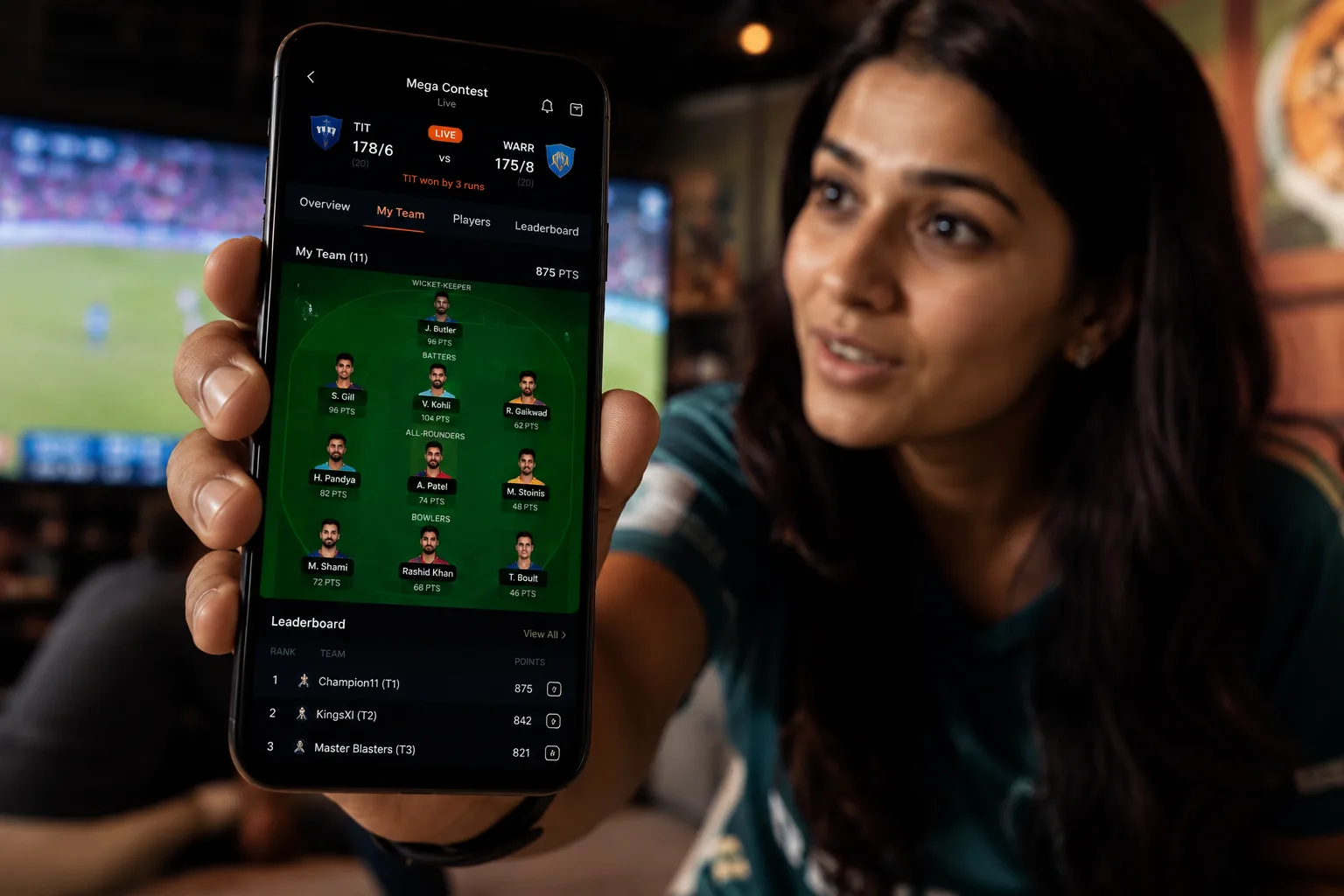
Fantasy Sports App Development — Scalable Cloud-Native Architecture
Microservices Architecture — Fantasy Sports Platform Redesign

One Architecture Redesign. Built for 10M Users, Not Just 3M.

Most teams patch infrastructure problems with bigger servers and manual scaling — solving today's crisis while creating tomorrow's. We approached this differently. The entire platform was redesigned as a cloud-native microservices architecture on GCP — each functional area isolated as an independent service that scales based on its own load. A Kafka and WebSockets real-time data pipeline replaced the legacy polling architecture. Flutter delivered a seamless cross-platform mobile experience. The result is a platform that handles 3M+ concurrent users at 99.9% uptime — and is architecturally ready for 10M+ without structural changes.

Technology Stack Powering This Mobile App

Every technology choice was made for one reason — performance at scale. Flutter for a seamless cross-platform experience. WebSockets and Kafka for real-time data at any volume. GCP auto-scaling for infrastructure that grows with demand. A stack built to handle millions of concurrent users during the highest-traffic moments in sport.

Flutter
Re
React JS
Node.js
We
WebSockets
GC
GCP
Pa
PayPal

Real Scale Challenges. Real Engineering Solutions.

Three infrastructure problems were silently destroying uptime, engagement, and growth potential. Here is exactly what they were — and how our team eliminated each one, with measurable results at 3M+ users.

01
The Problem

Live-Event Traffic Spikes Crashing the Platform

Every major match window triggered the same crisis — millions of users joining simultaneously, concurrency loads spiking beyond capacity, and an infrastructure with no elasticity to absorb the surge. The platform was not failing because of product-market fit. It was failing because the architecture could not scale. Downtime during peak events directly destroyed revenue and user trust at the worst possible moment.

01
Our Solution

GCP Auto-Scaling — Elastic Infrastructure for Any Traffic Load

We rebuilt the infrastructure on GCP with auto-scaling configured to expand compute resources in response to demand spikes — automatically, in seconds. Load balancing distributes traffic intelligently across services. The platform now absorbs peak-event surges without manual intervention, without downtime, and without the engineering team scrambling during live matches. 99.9% uptime across all live events since deployment.

02
The Problem

Real-Time Score Delays Killing User Engagement

Fantasy sports live or die on real-time data. Score updates delayed by even a few seconds during a live match create distrust, disengagement, and churn. The original pipeline was not built for the data volumes and velocity required at scale — backend bottlenecks increased response times precisely when millions of users needed instant feedback on their fantasy teams.

02
Our Solution

WebSockets + Kafka Pipeline — Real-Time Data at Scale

We implemented a dedicated real-time data pipeline using Kafka for high-throughput event streaming and WebSockets for low-latency push delivery to every connected client simultaneously. Score updates, leaderboard changes, and match events now reach users instantly — 50% faster data processing compared to the legacy architecture. The engagement difference was measurable within the first live event post-deployment.

03
The Problem

Monolithic Architecture Blocking Growth

The original platform was built as a monolith — a single codebase handling everything from user authentication to contest management to payment processing. Scaling one feature meant scaling the entire system. A bug in one module could bring down everything. Adding new sports categories or contest types required risky, time-consuming changes to the core codebase. The architecture was a ceiling on growth.

03
Our Solution

Microservices Architecture — Independent Scale Per Module

We redesigned the platform as a microservices architecture — separate, independently deployable services for authentication, contest management, scoring, leaderboards, payments, and notifications. Each service scales independently based on its own load. A payment spike does not affect the scoring engine. New sports categories and contest types can be added without touching existing services. The platform is now architected for the next 10M users, not just the current 3M.

Build a Scalable Fantasy Sports App
at a Fixed Price

A cloud-native fantasy sports platform engineered for millions of users — real-time scoring, contest management, auto-scaling infrastructure, and secure payment processing. Tell us about your project and get a detailed scope and fixed-price quote within 48 hours.

Reach Out Now
+91 96389 24757
Get a Fixed-Price Quote

How We Delivered This Project

From performance audit to live deployment at 3M+ users. Every milestone agreed upfront. Fixed price locked before development began. Direct engineer access throughout — no account managers, no communication gaps.

01

Performance Audit & Architecture Planning

Deep analysis of the existing platform — traffic patterns, peak-event load profiles, database bottlenecks, and the exact points where the architecture was losing responsiveness. Microservices migration plan and GCP infrastructure design agreed at fixed price before any code changes.

02

Microservices Architecture Design

Redesigned the platform as independent microservices — authentication, contest management, scoring engine, leaderboards, payment processing, and push notifications each isolated as separate, independently scalable services. Service boundaries designed to eliminate single points of failure.

03

Real-Time Data Pipeline Build

Built Kafka-based event streaming for high-throughput live match data and WebSockets for instant push delivery to every connected Flutter client. Score updates, contest results, and leaderboard changes now reach users in real time — at any scale, during any traffic load.

04

Flutter App & React Admin Panel

Cross-platform Flutter app rebuilt for performance — seamless experience on iOS and Android from a single codebase. React JS admin panel giving the operations team full visibility into contests, users, payments, and platform health in real time.

05

GCP Infrastructure & Auto-Scaling

GCP cloud infrastructure configured with auto-scaling groups, intelligent load balancing, and real-time monitoring. Load and stress tests simulated peak-event traffic at 3M+ concurrent users. PayPal payment gateway integrated with secure contest entry and prize payout workflows.

06

Load Testing, QA & Go-Live

Comprehensive load testing simulating multiple simultaneous live match windows. QA across all contest types, payment flows, and real-time data paths. Staged go-live with monitoring dashboards active. First live match window post-deployment handled 3M+ users at 99.9% uptime.

Business Benefits We Delivered

The measurable outcomes delivered — in platform reliability, data performance, user engagement, and infrastructure scale — by re-architecting a fantasy sports platform for cloud-native growth.


AZRIVA mobile app development team — Ahmedabad, India
50% Faster Data
Data Performance

Real-time data processing speed improved by 50% after the Kafka and WebSockets pipeline replaced the legacy architecture. Score updates, leaderboard refreshes, and contest results reach users instantly during live matches. The improvement in data velocity was measurable within the first live event post-deployment.

99.9% Uptime
Platform Reliability

Platform uptime held at 99.9% through every live match window post-deployment — including peak-event traffic at 3M+ concurrent users. Auto-scaling infrastructure absorbs surges automatically without manual intervention. The engineering team no longer scrambles during high-traffic events. The platform simply holds.

45% More Engagement
User Engagement

User engagement increased by 45% post-launch. Faster real-time updates, seamless contest experience, and a platform that never goes down during the moments that matter most directly drove higher session lengths, more contest entries per user, and stronger retention across all sports categories.

3M+ Users
Platform Scale

The platform now supports 3M+ active users at peak-event traffic — up from a limited capacity architecture that struggled under concurrency load. Microservices architecture and GCP auto-scaling mean the platform can grow to 10M+ users without architectural changes. Growth is no longer limited by infrastructure.

AZRIVA software development team Ahmedabad — mobile app development
"The platform handled our peak-event traffic without a single incident. Three million active users during a live match window — real-time scores updating, leaderboards refreshing, contests running — and the infrastructure held at 99.9% uptime throughout. The engineering team understood scale from day one."
Gaming Platform Client
Confidential - NDA Protected
Chief Technology Officer
🇮🇳 Confidential

Questions From Business Owners

Real questions from gaming founders and sports platform owners — answered directly and honestly.

Updated May 2026
Cost depends on platform complexity, number of sports and contest types, real-time data integrations, and infrastructure requirements. A production-ready fantasy sports app with real-time scoring, contest management, payment gateway, and admin panel typically represents a significant but well-defined investment. We provide a fixed price after a detailed discovery session — agreed before development begins, with no hourly billing. Contact us for a scope and quote within 48 hours.
A full-featured fantasy sports app with real-time data pipelines, contest management, leaderboards, payment processing, and admin panel typically takes 20-30 weeks from discovery to live deployment. Timeline depends on the number of sports categories, contest types, third-party data integrations, and whether you are building from scratch or migrating an existing platform. Every project is scoped and priced before development begins.
Real-time scoring in a high-traffic fantasy app requires two layers — a high-throughput event streaming layer (Kafka) to ingest live match data and process score calculations, and a low-latency push delivery layer (WebSockets) to update every connected user simultaneously. This architecture delivers instant score updates to millions of concurrent users without polling delays or backend bottlenecks. It is the same approach we used to achieve 50% faster data processing in this project.
Flutter delivers a consistent, high-performance cross-platform mobile experience for iOS and Android from a single codebase — critical for fantasy sports where UI responsiveness directly affects engagement. Node.js handles the backend microservices. WebSockets and Kafka power real-time data pipelines. GCP provides auto-scaling cloud infrastructure for peak-event traffic management. PayPal or Razorpay handles secure contest entry fees and prize payouts.
Scaling to millions of users requires a microservices architecture where each functional area — authentication, contest management, scoring, leaderboards, payments — operates as an independent service that scales based on its own load. Auto-scaling cloud infrastructure (GCP or AWS) expands compute resources automatically during traffic spikes. WebSockets maintain persistent connections for real-time updates without polling overhead. This architecture is how we supported 3M+ concurrent users at 99.9% uptime.
Yes. We build custom fantasy sports platforms with the core features that drive engagement on platforms like Dream11 — real-time scoring, contest creation and management, live leaderboards, multi-sport support, secure payment processing, and a full admin operations panel. We build from scratch at a fixed price, not from white-label templates. Every platform is custom-engineered for your specific sports categories, contest types, and monetization model.
Yes. This project was delivered under a full NDA. The client name, platform brand, and specific sports categories remain confidential. We regularly work under NDA for gaming and sports technology clients where competitive confidentiality is a commercial requirement. Full technical and outcome details are available to qualified prospects under NDA on request.
Sports App Development Company Flutter App Development Company Mobile App Development Company India AI Powered App Development
💬 Chat with us on WhatsApp